
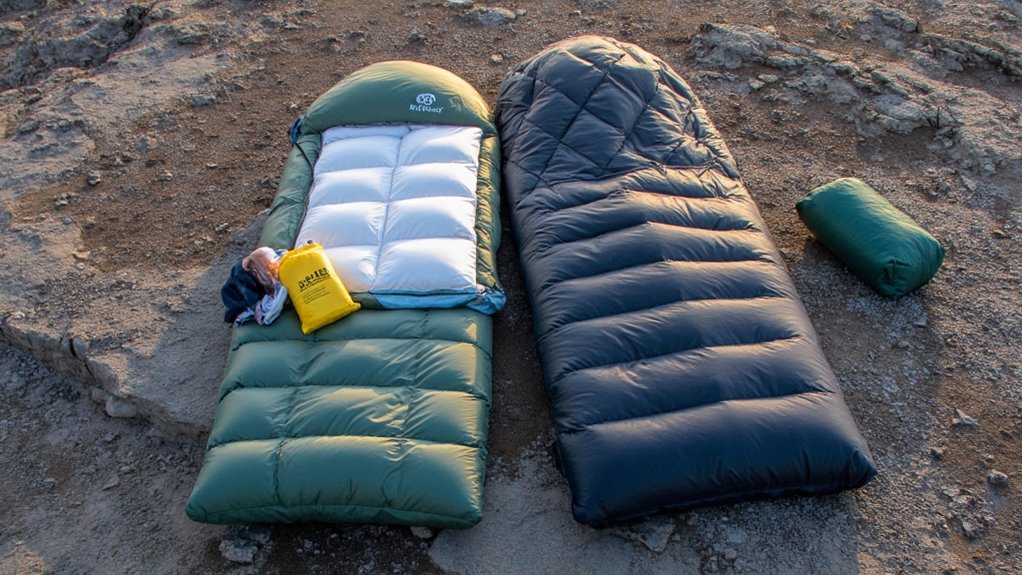
I choose down sleeping bags when I’m backpacking in dry climates because they pack smaller and weigh less than synthetic options, making them ideal for long-distance trips. However, if I’m camping in wet conditions or humid environments, I go with synthetic insulation since it maintains warmth even when damp and dries quickly. Down bags cost more upfront but last decades with proper care, while synthetic bags are affordable yet typically need replacement every 5-7 years. Your decision ultimately depends on your camping environment and how you’ll use it.
When Down Beats Synthetic (and When It Doesn’t)
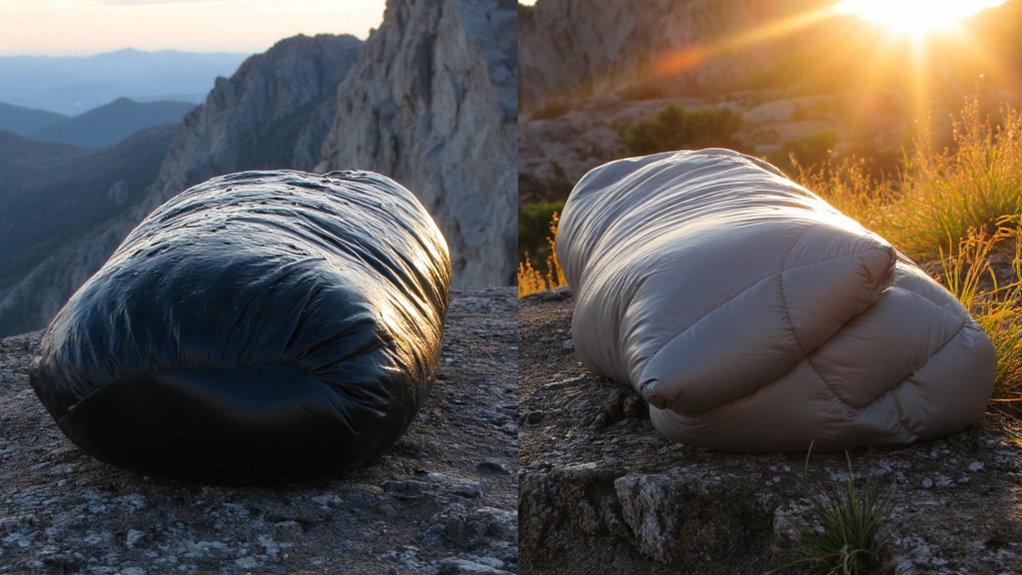
When it comes to warmth-to-weight ratio, down crushes synthetic fill every time.
I’ve found that higher fill power ratings mean better insulation with less weight.
Down also compresses smaller, making it ideal for backpacking trips where space matters.
However, down fails when wet.
Synthetic maintains warmth even in damp conditions and dries faster.
For durability comparison, down lasts longer with proper care—often decades versus five years for synthetic.
If you’re camping in humid climates or on a budget, choose synthetic.
For dry conditions and lightweight performance, I’d pick down every time.
Wet Weather Performance: Why Synthetic Wins in Rain and Humidity
I’ve learned this lesson the hard way: nothing ruins a camping trip faster than a soaked sleeping bag that won’t keep you warm.
When down gets wet, it clumps and loses all insulating power.
Down also takes forever to dry in humid conditions, creating perfect conditions for mold growth.
Synthetic bags dry quickly using simple drying methods like wringing and air-drying.
In consistently wet climates or rainy seasons, I’ll choose synthetic every time.
The performance difference when moisture’s involved isn’t even close.
Sleeping Bag Weight and Pack Size: The Backpacker’s Dilemma
Why does every ounce matter when you’re hauling your life on your back?
Down sleeping bags compress smaller and weigh considerably less than synthetic alternatives.
I’ve seen down bags pack to softball size while synthetic versions remain bulky.
For backpacking, I follow weight guidelines: target bags under three pounds for summer trips, four pounds for three-season use.
Down excels here, offering better warmth-to-weight ratios.
However, pack ergonomics matter too.
A slightly heavier synthetic bag might work if you’ve got extra room.
Consider your trip length, pack capacity, and body strength when deciding which material suits your needs.
What Down and Synthetic Bags Actually Cost Over Time
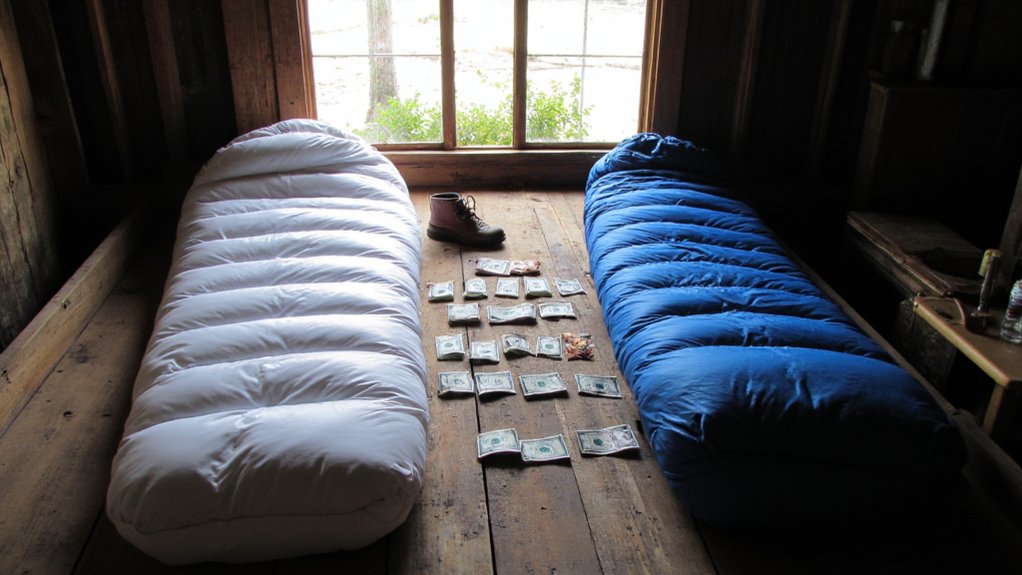
Shopping for a sleeping bag means looking beyond the price tag.
I’ve learned that down bags, while expensive initially, often last 15-20 years with proper care.
Synthetic bags typically need replacement after 5-7 years of regular use.
When you factor in replacement value, that $400 down bag costs roughly $20 annually, while a $150 synthetic bag runs about $25 yearly.
The inflation impact matters too—today’s $400 might be $500 in five years when you’d replace synthetic.
Down’s durability makes it the better long-term investment if you’re committed to maintaining it properly.
Which Insulation for Backpacking, Car Camping, and Winter Trips
Because each camping style demands different priorities from your sleeping bag, matching insulation type to your specific activities saves both weight and money.
For backpacking, I recommend down with 800+ fill power since you’ll carry it miles.
The superior fabric loft compresses smaller in your pack.
Car camping eliminates weight concerns, making synthetic bags practical and affordable.
You won’t notice the bulk when it stays in your vehicle.
Winter trips require careful evaluation.
While high fill power down provides maximum warmth-to-weight, synthetic insulation performs better if condensation from your breath creates moisture inside your tent.
Conclusion
Look, I’ll level with you: after all this analysis, you’re probably *still* going to buy the sleeping bag that’s on sale next week, regardless of what I’ve told you. But hey, at least now when you’re shivering in your soggy synthetic bag on a sunny desert trip—or watching your down bag clump into uselessness during a rainstorm—you’ll know *exactly* which mistake you made. You’re welcome.