
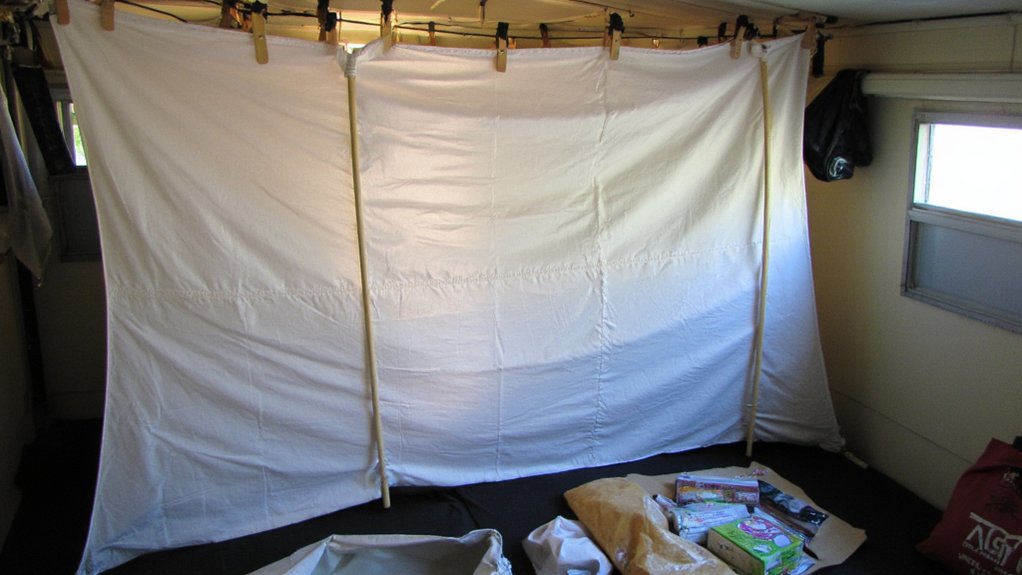
I always clean my high-end tent with mild soap and water, then let it dry completely—inside and out—before storage. I store it loosely in a breathable cotton bag or mesh sack, never in an airtight stuff sack. I keep it in a climate-controlled indoor closet away from direct sunlight, basements, and garages where humidity fluctuates. I maintain storage humidity below 50 percent and check every two to three months for moisture or musty odors. Below, I’ll walk you through each critical step to protect your investment.
Clean and Dry Your Tent Completely Before Storage
Why does mold develop on stored tents in the first place?
Moisture is the culprit.
Even tiny amounts of dampness trapped in fabric create perfect conditions for mold growth.
I can’t stress this enough: you must clean your tent thoroughly before storage.
Remove dirt, debris, and any organic matter that feeds mold.
Use mild soap and water, then rinse completely.
Here’s the critical step: thorough drying is non-negotiable.
Never pack a damp tent.
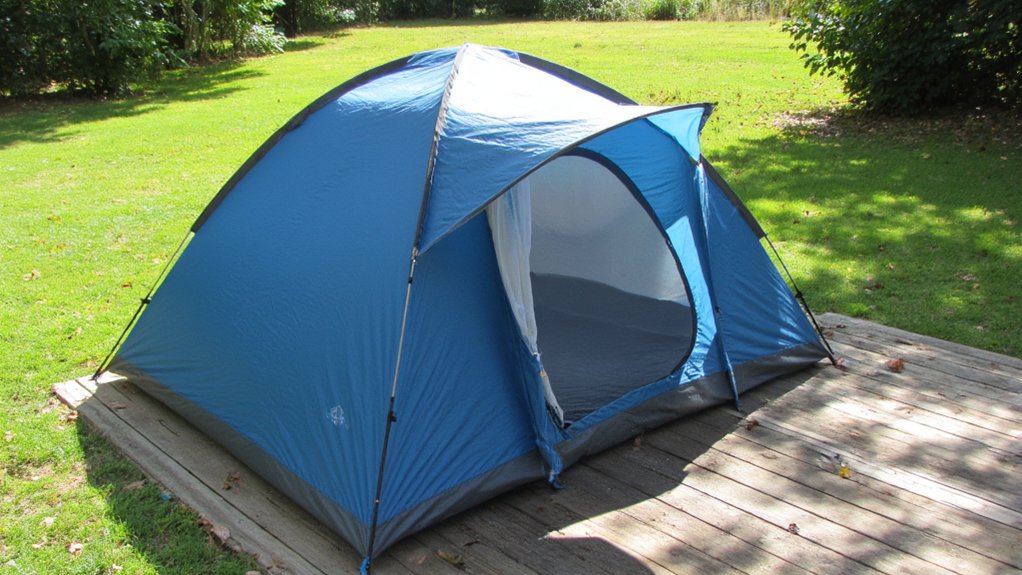
Set it up and air dry it completely, inside and out.
This takes patience, but it’s your best mold prevention strategy.
Additionally, store loosely rather than tightly compressed to allow any remaining moisture to escape and prevent fabric degradation.
Choose the Right Storage Location for Your High-End Tent
Once your tent is clean and dry, the next critical decision is where you’ll store it.
I recommend an indoor closet with consistent temperature and low humidity.
Avoid storing your tent in a basement corner, garage, or attic where moisture and temperature fluctuations create ideal conditions for mold growth.
Look for a climate-controlled space away from direct sunlight, which can degrade tent fabrics over time.
The storage area should have good air circulation and remain consistently dry year-round.
A bedroom closet or similar interior space provides the stable environment your high-end tent needs.
Keep Your Tent Away From Direct Sunlight and Heat Sources
Ultraviolet rays and excessive heat will silently destroy your tent’s waterproof coatings, weaken fabric fibers, and cause colors to fade long before mold becomes a concern.
I recommend storing your tent in a climate-controlled closet, basement, or under-bed space where temperatures remain consistent.
UV damage occurs even through windows, so I avoid attics, garages, and storage sheds where heat exposure fluctuates dramatically.
Direct sunlight breaks down synthetic materials at the molecular level, compromising your tent’s structural integrity.
I choose dark, cool locations that maintain stable temperatures year-round, ensuring my investment stays protected from both environmental degradation and moisture-related issues.
Both polyurethane and silicone coatings suffer from prolonged UV exposure, though silicone typically demonstrates superior UV resistance and maintains its waterproofing properties longer when stored properly.
Store Your Tent in a Breathable Bag Not a Stuff Sack
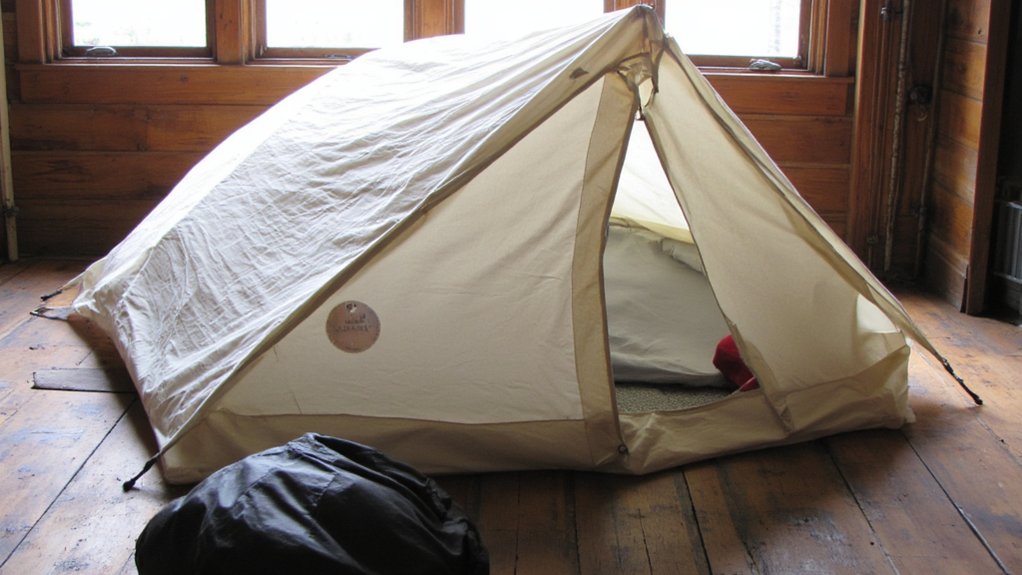
Proper storage location means little if I’m suffocating my tent in an airtight stuff sack.
Breathability benefits my tent by allowing moisture to escape and air to circulate, preventing mold growth during long-term storage.
I always use a large mesh bag or pillowcase instead.
Bag alternatives include cotton storage sacks that came with my tent or even a cardboard box.
The key is avoiding compression.
I’ll loosely fold my tent and place it in a breathable container.
This simple switch from a waterproof stuff sack to a breathable option dramatically reduces condensation buildup and keeps my high-end tent fresh.
Store Your Tent Loosely to Preserve Fabric Integrity
Cramming my tent into a tight ball for months on end creates permanent creases and weakens the fabric’s waterproof coating.
I’ve learned that loose packing is essential for maintaining my tent’s performance.
Instead of compressing it tightly, I drape it over a hanger or fold it gently in a large storage bin.
This approach eliminates fabric tension that degrades the material over time.
The key is giving the fabric room to breathe without constant stress on the fibers.
When I store my tent this way, it maintains its shape, waterproofing, and structural integrity season after season.
Understanding your tent’s waterproofing scale rating helps you determine how carefully you need to maintain the protective coating during storage.
Maintain Storage Area Humidity Below 50 Percent
Why does my expensive tent develop those telltale musty spots even when I’ve cleaned it thoroughly?
The answer lies in humidity levels.
I’ve learned that mold thrives above 50 percent humidity, making moisture control essential.
I monitor my storage area with a hygrometer and run a dehumidifier when needed.
Dehumidifier efficiency varies by model, so I choose one rated for my space size.
I also guarantee adequate air exchange by cracking a window or using a small fan.
These steps create an inhospitable environment for mold, protecting my investment from moisture damage year-round.
Check Your Tent Every Few Months During Off-Season Storage
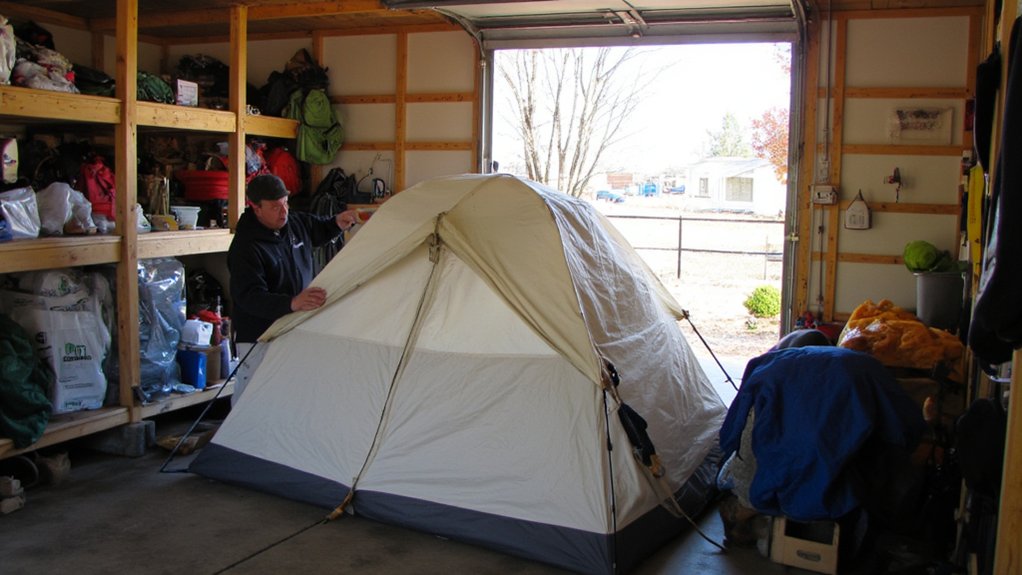
Even with perfect humidity control, I don’t simply store my tent and forget about it until next camping season.
I’ve learned that seasonal checks are essential for catching problems early.
I inspect my tent every two to three months, looking for any signs of moisture, musty odors, or discoloration.
This cadence planning guarantees I can address issues before they become serious mold problems.
During each check, I unfold the tent slightly, examine stress points and corners, and verify the storage area’s humidity hasn’t changed.
These brief inspections give me peace of mind and protect my investment.
Emergency Storage When Your Tent Is Still Slightly Damp
Sometimes life doesn’t cooperate with perfect tent care schedules, and I’ve faced situations where I absolutely had to pack up a tent that wasn’t completely dry.
When this happens, I immediately plan emergency drying within 24-48 hours maximum.
I’ll unpack the tent as soon as possible and set it up indoors with fans running for rapid venting.
If setup isn’t feasible, I drape it loosely over furniture or a shower rod.
The key is preventing the damp fabric from sitting compressed.
I’ve learned that quick action prevents mold growth, even after less-than-ideal packing conditions.
Confirm Your Tent Is Completely Mold-Free Before Storing
Before I commit my tent to long-term storage, I conduct a thorough inspection under bright light to catch any mold that might’ve started developing. I look for key mold indicators: musty odors, discolored patches, or fuzzy growth on fabric and seams. If I spot anything suspicious, I immediately take remediation steps.
I clean affected areas with a specialized tent cleaner or diluted vinegar solution, scrubbing gently with a soft brush. After treatment, I let the tent dry completely again, then reinspect. Only when I’m certain it’s mold-free do I proceed with storage. Like sleeping bags that require proper care to maintain their insulation properties, tents need complete dryness and moisture resistance to prevent degradation during storage.
Conclusion
I’ve invested thousands in my high-end tent, and I’m not about to let mold destroy it. Here’s what stops me cold: studies show that mold can begin growing on damp fabric in just 24-48 hours. That’s why I’m obsessive about these storage steps. My tent represents countless adventures ahead, and proper storage guarantees it’ll be ready when I am. Don’t let a few careless moments ruin your gear investment and future trips.