
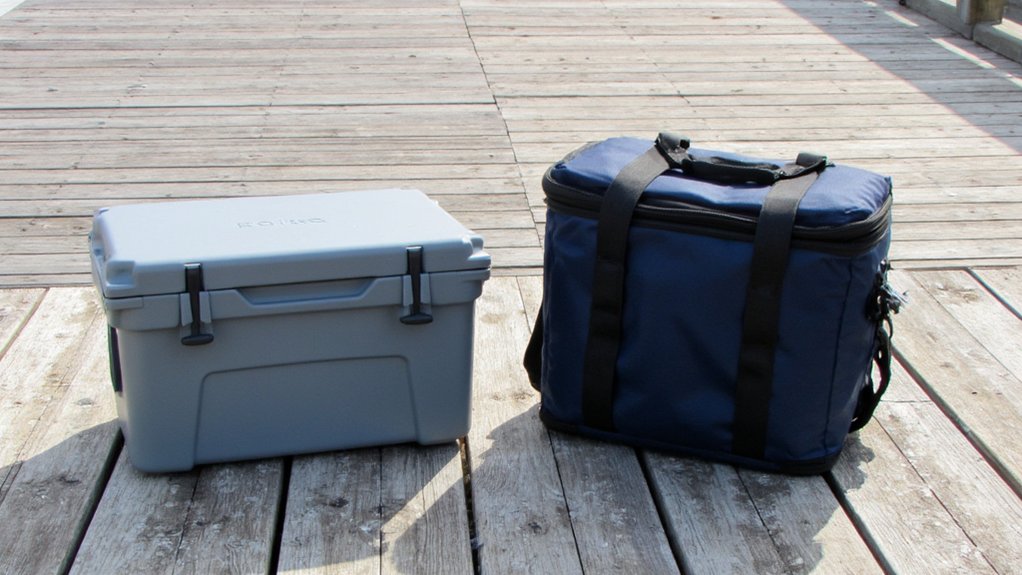
Hard-sided coolers are my go-to for multi-day camping trips because they’ll keep ice frozen for 5-7 days thanks to thick rotomolded walls, while soft-sided models typically last 2-4 days but weigh just 5-10 pounds compared to 15-30 pounds for hard coolers. I’d choose hard-sided for bear country and stationary setups, but soft-sided wins for beach days and tight storage spaces. Prices run $100-$300 for soft models versus $200-$500+ for hard ones. Understanding when each type truly excels will help you avoid the costliest cooler mistake.
Hard-Sided vs. Soft-Sided Coolers: When to Choose Each Type
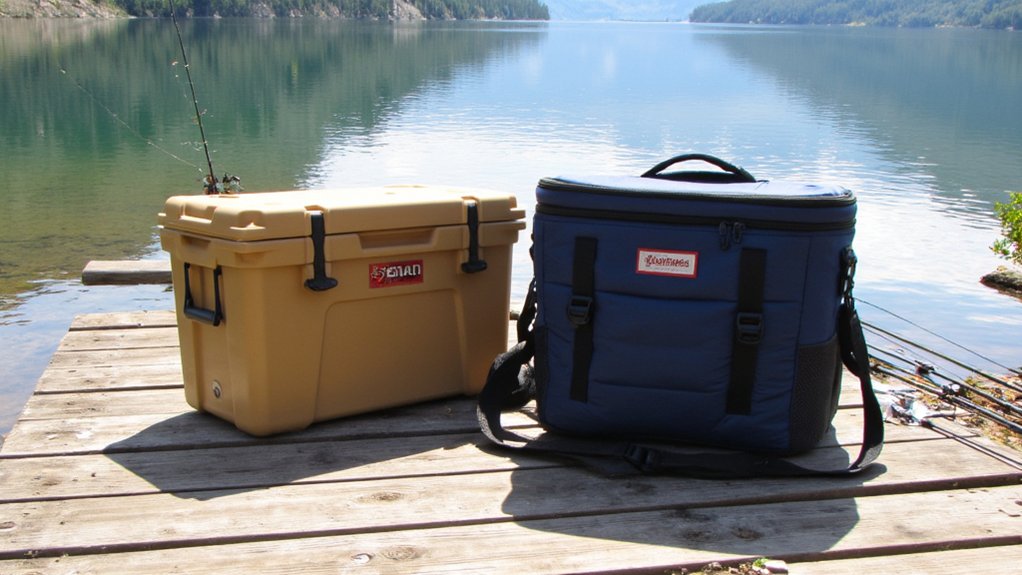
Choosing between hard-sided and soft-sided coolers ultimately depends on how you’ll use them.
I’ve found that hard-sided models excel when you need maximum ice retention and durability for extended trips.
They’re perfect for camping or tailgating where the cooler stays stationary.
Soft-sided coolers shine in portability—I grab mine for day trips, picnics, and beach outings.
When making brand comparisons, consider the material differences: hard coolers use rotomolded plastic while soft versions feature insulated fabrics.
If you need protection in wilderness areas, hard-sided coolers are the only option with bear resistance certification.
I recommend hard-sided for serious outdoor adventures and soft-sided when you’re prioritizing convenience and easy transport.
Ice Retention: Which Cooler Type Keeps Contents Cold Longer
When I tested multiple coolers side-by-side, hard-sided models consistently outperformed their soft-sided counterparts in ice retention by 2-3 days.
The superior ice duration stems from hard-sided coolers’ thicker walls and rotomolded construction, which creates a seamless barrier against heat transfer.
Soft-sided coolers, despite quality insulation, develop insulation gaps at seams and zippers where warm air penetrates.
I’ve found hard-sided units maintain ice for 5-7 days in moderate conditions, while soft-sided versions typically last 2-4 days.
However, if you’re planning day trips or weekend outings, soft-sided coolers provide adequate ice retention without the bulk.
Weight and Portability: Hard vs. Soft Coolers
How much does weight matter when you’re hauling a cooler from your car to a campsite? I’ve found it’s essential.
Soft-sided coolers typically weigh 5-10 pounds empty, while hard-sided models range from 15-30 pounds.
That’s before adding ice and supplies.
Soft coolers excel in portability features.
They include padded shoulder straps, flexible designs, and collapsible storage.
Hard coolers compensate for bulk with sturdy handles, built-in wheels, and superior weight distribution through molded grips.
I choose soft coolers for short trips and hard-sided versions when I’m driving close to my destination.
Durability: How Each Type Handles Extreme Conditions
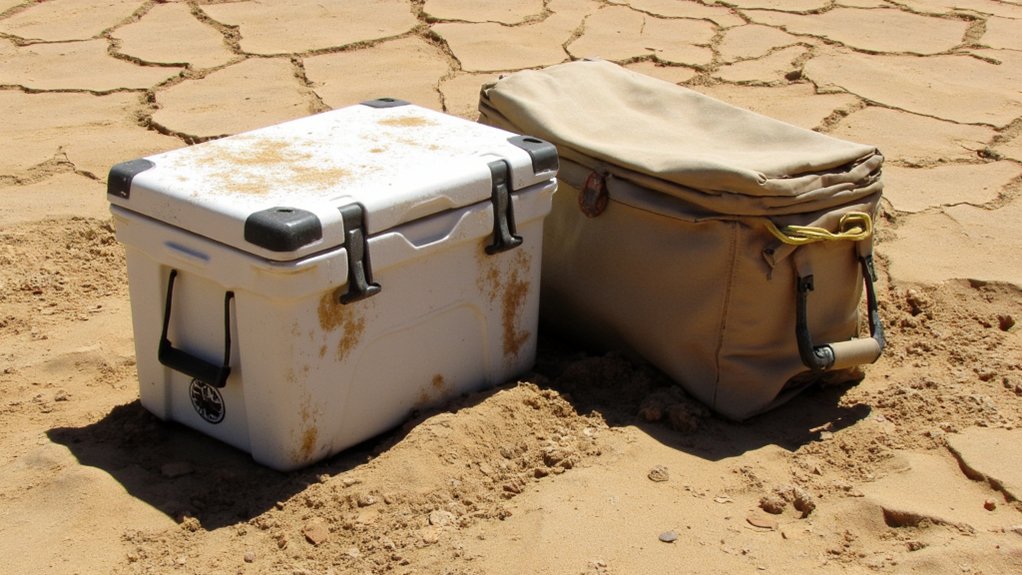
I’ve watched a grizzly bear knock over a hard-sided cooler without leaving more than a few scratches on the rotomolded exterior.
That’s exceptional impact resistance you won’t find with soft-sided models.
Hard coolers excel in extreme conditions—they’re bear-proof, puncture-resistant, and handle drops onto rocks without failing.
However, soft coolers resist material fatigue better due to their flexible construction.
They won’t crack in freezing temperatures like hard shells can.
When you’re maneuvering tight spaces or rough terrain, soft coolers absorb punishment differently.
If you’re planning water-based adventures, consider models with proper IPX waterproofing ratings to ensure your gear stays protected during submersion or heavy rain exposure.
Each type survives extreme conditions through fundamentally different engineering approaches, making your intended use critical.
Storage Space in Hard-Sided vs. Soft-Sided Coolers
Storage capacity numbers tell only half the story—what matters is usable space.
I’ve found hard-sided coolers offer superior internal capacity because their rigid walls don’t collapse inward.
You’ll maximize every cubic inch advertised.
Soft-sided models compress when packed, reducing actual storage.
However, they excel at fitting into tight spaces like boat compartments or car trunks.
Hard-sided coolers often include modular dividers, letting you organize contents efficiently.
Soft-sided versions typically lack this feature, though some premium models offer removable compartments.
Consider what you’re storing—hard-sided wins for volume, soft-sided for flexibility in confined areas.
Price Differences: What You’ll Pay for Each Type
Budget considerations often matter as much as storage needs when choosing between these cooler types. I’ve found that soft-sided coolers typically cost $100-300, while hard-sided models range from $200-500 or more.
The retail pricing gap exists because hard-sided coolers use more materials and complex manufacturing processes. However, you can narrow this difference through bulk discounts when purchasing multiple units for commercial purposes or group outings. I recommend comparing features within your price range rather than solely focusing on initial cost, since both types offer varying insulation quality and durability that affect long-term value.
Best Use Cases for Hard vs. Soft Coolers
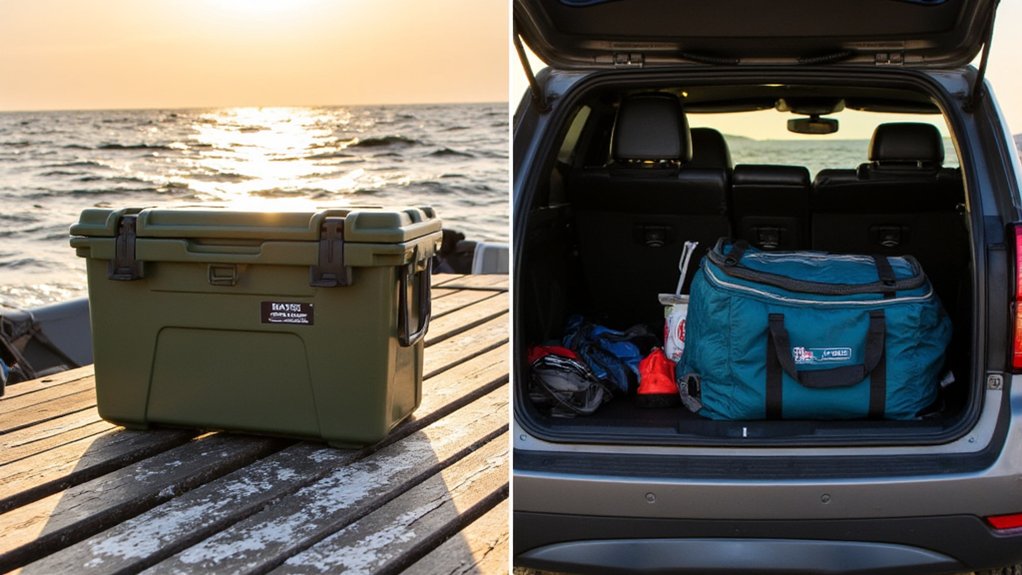
Where you plan to use your cooler determines which type will serve you best.
I recommend hard-sided coolers for camping trips where you’ll keep them at your campsite or in your truck bed.
They excel at extended ice retention and bear resistance.
Soft-sided coolers work better for fishing trips, beach outings, and day hikes.
You can easily carry them on your shoulder, fit them in tight boat spaces, and pack them away when empty.
Hard coolers suit stationary adventures, while soft coolers shine during mobile activities requiring portability and flexibility.
Common Cooler Mistakes That Waste Ice and Money
After spending hundreds of dollars on a premium cooler, most people sabotage its performance through simple mistakes that drain ice within hours instead of days.
I’ve seen countless campers pre-cool their coolers inadequately, allowing warm interior surfaces to melt ice rapidly.
Opening your cooler frequently destroys cold retention—plan ahead and grab everything you need at once.
Improper sealing occurs when debris blocks gaskets or latches aren’t fully engaged.
Poor insulation happens when you pack items loosely, creating air pockets that accelerate melting.
Always pre-chill contents, use ice-to-content ratios of 2:1, and keep your cooler shaded to maximize performance.
Conclusion
I know what you’re thinking: “Why can’t I just stick with my old $20 cooler?” Trust me, I’ve been there. But after watching hundreds of dollars in food spoil on a week-long camping trip, I learned the hard way that investing in the right high-performance cooler—whether hard-sided or soft-sided—pays for itself. Choose based on your needs, not just your budget, and you’ll never look back.