
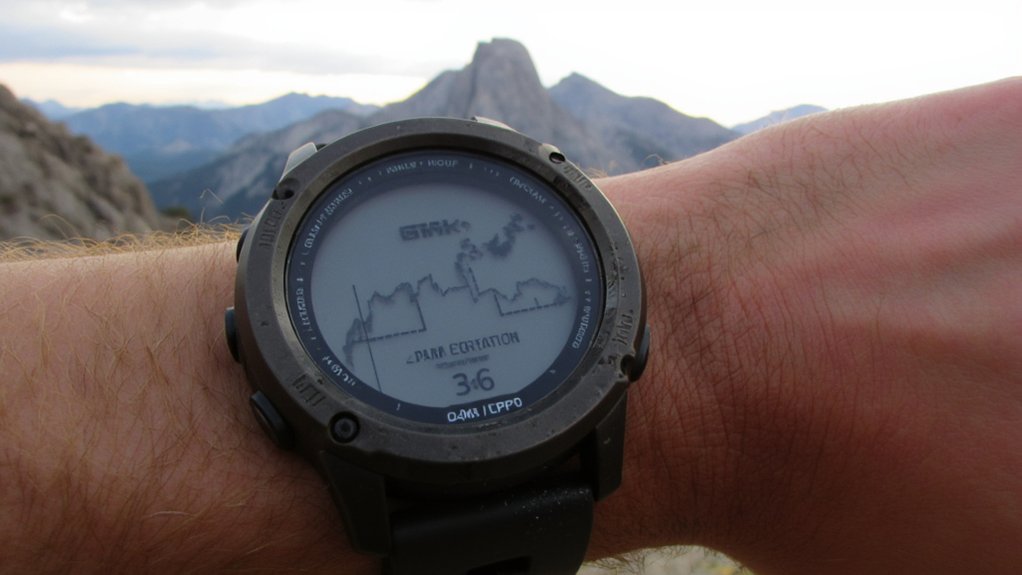
A rugged GPS watch is a premium outdoor device built with military-grade materials, extended battery life, and topographic mapping capabilities, typically costing $400–$1,200. I’ll be direct: you need one if you’re a trail runner, backcountry hiker, or extreme athlete who ventures into remote areas where durability and navigation are critical. If you’re a casual exerciser or weekend warrior, a basic fitness tracker will suffice. The premium features—sapphire crystal displays, 100m+ water resistance, and satellite mapping—justify the cost only when your adventures demand them. Let me break down exactly what separates these devices from regular options.
Who Needs a Rugged GPS Watch? Trail Runners, Hikers, and Extreme Athletes
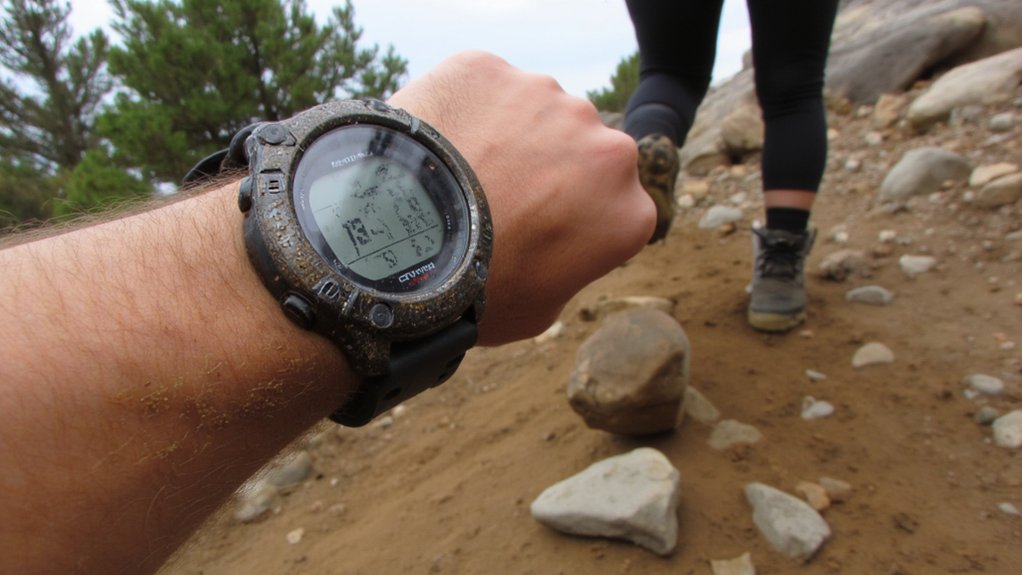
How do you know if you’re the type of person who actually needs a rugged GPS watch?
I’ll break it down simply.
If you’re a trail runner finding your way through remote paths where trail safety is critical, you need reliable navigation and tracking.
Hikers tackling multi-day backcountry routes benefit from weather resistance and extended battery life.
Extreme athletes—think ultra-marathoners, mountain climbers, or adventure racers—require durability that withstands harsh conditions.
You’ll also want to weigh gear compatibility with your existing equipment.
Consider whether you need features like topographic maps for detailed terrain visualization during your outdoor adventures.
If your activities regularly push you beyond cell service into challenging terrain, a rugged GPS watch isn’t just nice to have—it’s essential safety equipment.
When Basic Fitness Trackers Meet Your Needs Without the Premium
While rugged GPS watches offer impressive capabilities, most weekend warriors and casual exercisers don’t need them.
If you’re tracking daily steps, monitoring basic heart rate, and logging occasional runs, a budget comparison reveals standard fitness trackers deliver these functions at a fraction of the cost.
The feature gaps between premium and basic devices matter less when you’re not trekking backcountry trails or enduring extreme conditions.
I’ve found that paying $400-800 for military-grade durability and advanced mapping makes little sense if you’re primarily exercising at your local gym or neighborhood park.
Unless you’re venturing into remote areas where you’d need satellite communication devices to send emergency signals, the connectivity features of premium GPS watches remain largely unused.
Rugged vs. Regular GPS Watches: What Makes Them Different
Understanding the distinction between rugged and regular GPS watches comes down to three core differences: construction, environmental protection, and specialized features.
The durability contrasts are significant—rugged models use reinforced bezels, sapphire crystal displays, and military-grade materials like titanium or fiber-reinforced polymer.
Regular GPS watches typically feature standard glass and plastic casings.
Material differences extend to water resistance ratings (often 100m+ versus 50m), temperature tolerances, and shock resistance.
Rugged watches include altimeters, barometers, and extended battery life for multi-day expeditions.
Regular models focus on everyday fitness tracking without extreme-condition capabilities.
These distinctions directly impact price and functionality.
When evaluating water resistance, understanding IPX waterproofing ratings helps you match the watch’s protection level to your specific adventure conditions, from light rain exposure to full submersion scenarios.
Battery Life, Mapping, and Military-Grade Durability: What You’re Paying For
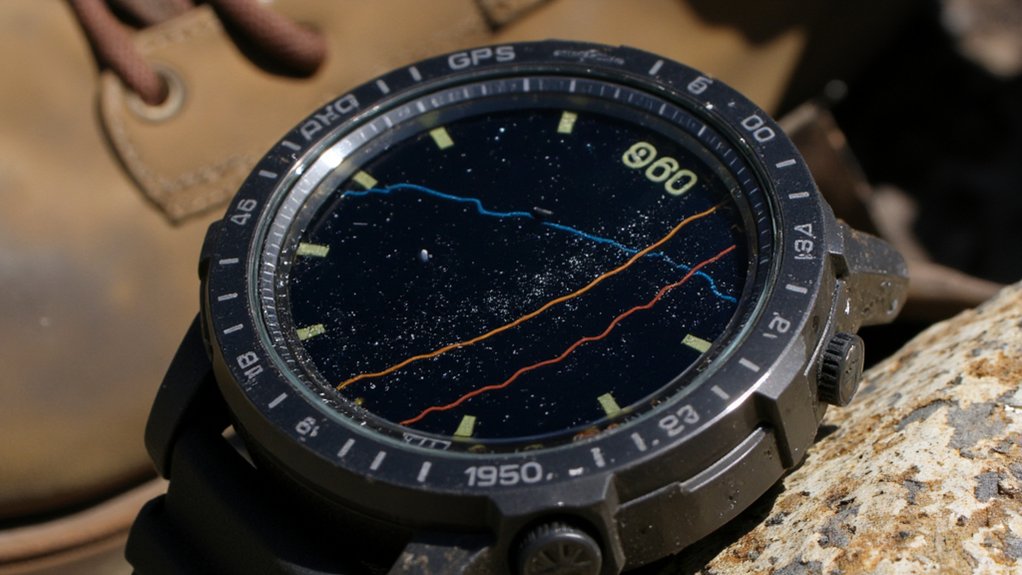
When you’re evaluating rugged GPS watches in the $400-$1,200 range, you’re primarily paying for three premium features that separate them from budget alternatives.
First, extended battery life enables multi-day expeditions without recharging.
You’ll face battery tradeoffs between GPS accuracy modes and runtime—precision tracking drains power faster.
Second, topographic mapping with preloaded trail data replaces traditional maps and compasses.
Third, military-grade durability (MIL-STD-810 certification) guarantees your watch survives extreme temperatures, shocks, and water immersion.
This durability pricing reflects rigorous testing and premium materials like sapphire crystal displays and reinforced titanium bezels that withstand punishment regular watches can’t handle.
For extended backcountry trips where charging isn’t possible, some adventurers pair their GPS watches with portable solar panel systems to maintain power independence.
How Much Does a Quality Rugged GPS Watch Cost?
Quality rugged GPS watches typically cost between $400 and $1,200, with the sweet spot around $600-$700 for most outdoor enthusiasts.
I’ve found these price ranges reflect the technology you’re getting—advanced sensors, satellite connectivity, and durable construction don’t come cheap.
Brand pricing varies substantially: Garmin dominates the market with options from $450-$1,000, while Suunto and COROS offer competitive alternatives.
You’ll pay premium prices for features like topographic maps, multi-band GPS, and extended battery modes.
Budget models under $400 exist, but they often sacrifice mapping capabilities and durability that define truly rugged watches.
5 Questions to Ask Before Investing in a Rugged GPS Watch
Before you spend $600 or more on a rugged GPS watch, I recommend asking yourself several pointed questions to guarantee you’re making the right investment.
Will you actually use the advanced features that justify premium price ranges?
Does the brand reliability match your durability needs?
Can your smartphone handle most navigation tasks instead?
Do you need military-grade toughness, or would a basic fitness tracker suffice?
Will you maintain and update the device regularly?
Does the battery life align with your adventure duration?
Honestly answering these questions prevents buyer’s remorse and ensures you purchase what you’ll actually use.
Conclusion
I’ve walked you through the world of weatherproof wonders, from battery basics to budget boundaries. Now you need to decide: Does your outdoor obsession demand durable, dependable data tracking, or will a basic band suffice? Consider your conditions carefully—the trails you tackle, the terrain you traverse, the time you spend seeking summits. Whether you’re a weekend warrior or wilderness wanderer, choose wisely. Your wrist deserves the right watch for your wild adventures.