
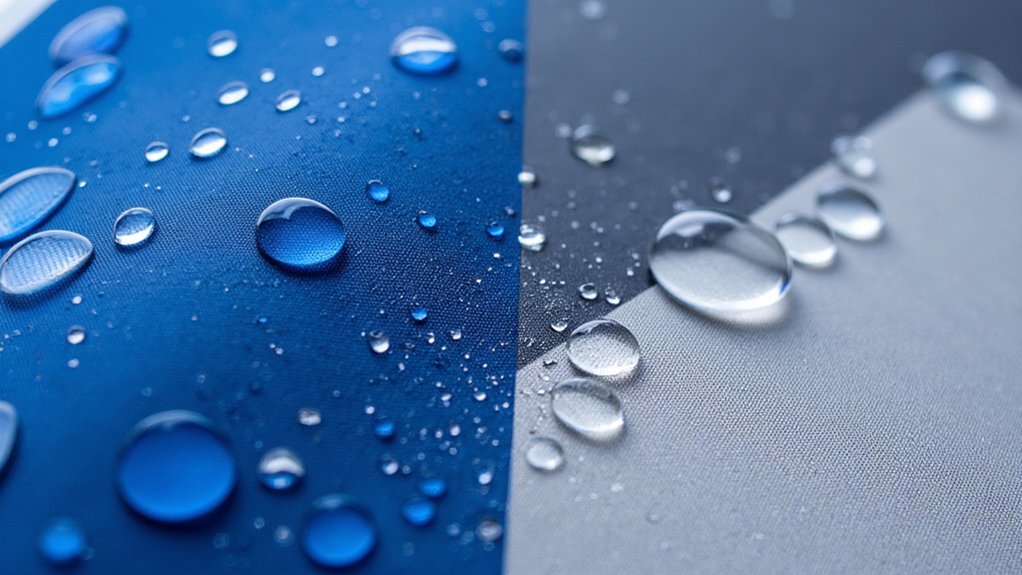
I’ve found that polyurethane coatings create a barrier film on top of your tent fabric, blocking water while allowing vapor through, whereas silicone bonds directly into the fibers and repels moisture through ultra-low surface tension. PU costs less upfront but degrades in 2–5 years from UV and hydrolysis, while silicone weighs 10–20% less and can last over a decade with proper care. Your choice depends on your camping style, budget, and how long you need your tent to perform in challenging conditions.
How PU and Silicone Coatings Repel Water
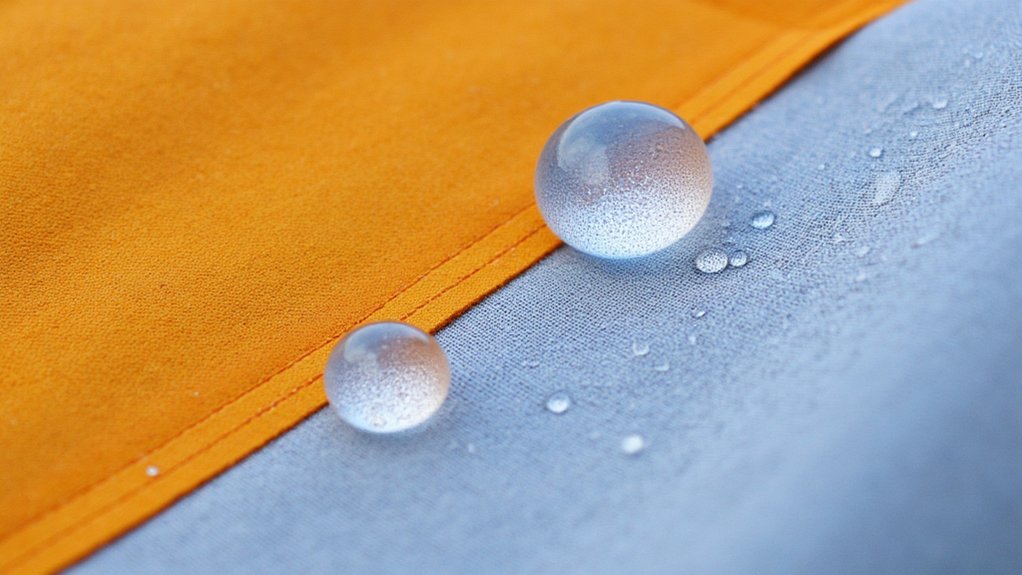
When rain hits your tent fabric, two different chemical approaches stand between you and a soggy night.
Polyurethane creates a continuous polymer network that blocks water molecules from penetrating while allowing smaller water vapor molecules through.
I’ll explain the hydrophobic mechanism: silicone works differently by bonding to fabric fibers at the molecular level, creating an ultra-low surface energy that makes water bead up and roll off.
PU coating sits on top of fabric like a barrier film.
Silicone integrates into the material itself, repelling moisture through surface tension rather than simple blockage.
These waterproofing differences are measured using hydrostatic head ratings, which quantify how much water pressure each coating can withstand before leaking.
Which Coating Is Right for Your Camping Style?
How do you decide which waterproofing technology matches your outdoor adventures?
I’ll help you match coatings to your camping style and climate patterns.
If you’re a weight-conscious backpacker facing occasional rain, silicone’s lightweight durability excels.
For family car camping in humid climates, PU coatings offer affordability and easier repairs.
Consider your typical conditions: silicone handles UV exposure and temperature extremes better, while PU performs well in moderate climates.
Budget matters too—PU costs less initially, though silicone’s longevity might save money long-term.
Match the technology to where and how you actually camp, not idealized scenarios.
When evaluating tent specifications, understanding IPX waterproofing ratings helps you compare protection levels across different gear categories.
PU vs Silicone: Durability and UV Breakdown Compared
Why does your tent’s waterproof coating degrade faster in some conditions than others? I’ll explain the durability metrics that matter most.
Polyurethane coatings are vulnerable to hydrolysis—moisture and heat cause them to break down, becoming sticky and flaking off.
UV aging accelerates this process considerably.
You’ll typically get 2-5 years before PU degrades noticeably.
Silicone resists both UV aging and hydrolysis remarkably well.
I’ve seen silicone-coated tents maintain waterproofing for 10+ years.
The trade-off? Silicone costs more upfront, but superior durability metrics make it worthwhile for long-term use in harsh conditions.
Proper seasonal storage—cleaning, drying completely, and storing loosely—prevents accelerated coating breakdown and extends your tent’s lifespan regardless of coating type.
Weight and Packability Differences Between Coatings
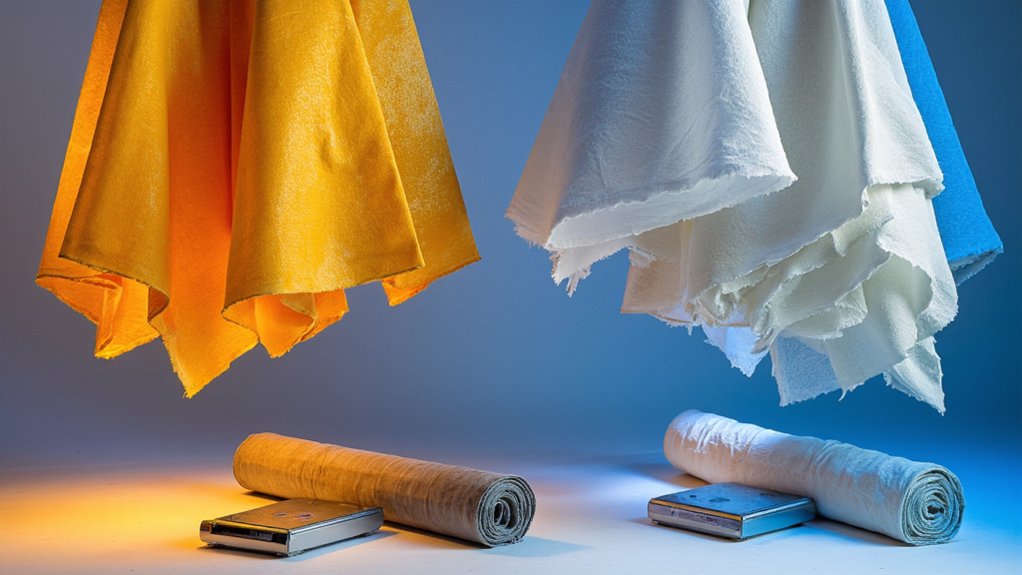
Beyond longevity, the coating you choose affects how much weight you’ll carry on the trail.
In my weight comparison tests, silicone-coated fabrics consistently weigh 10-20% less than polyurethane alternatives.
This difference stems from silicone’s ability to penetrate fabric fibers rather than sitting as a heavy surface layer like PU does.
Packability factors also favor silicone.
I’ve found sil-coated tents compress smaller because the coating doesn’t stiffen the fabric.
PU creates a more rigid structure that resists tight packing.
For ultralight backpackers counting every ounce, silicone’s weight and pack-size advantages make it the superior choice for multi-day expeditions.
When evaluating gear, consider that the warmth-to-weight ratio principle applies beyond insulation—coating choice impacts your overall pack efficiency.
When to Reapply Waterproofing or Replace Your Tent
Your tent’s waterproofing won’t last forever, no matter which coating you’ve chosen.
I recommend monitoring your tent’s performance after each trip.
When you notice water beading less effectively or fabric feeling tacky, it’s time to act.
Reapply timing typically ranges from 1-3 years for polyurethane coatings, while silicone lasts 3-5 years with proper care.
However, if you spot delamination, extensive flaking, or fabric degradation, reapplication won’t help.
Replacement timing depends on damage severity—when structural integrity compromises or coating restoration fails repeatedly, invest in a new tent rather than continuing repairs.
Conclusion
I’ve walked you through the waterproofing wisdom that keeps campers comfortable and dry. Whether you prefer polyurethane’s practical protection or silicone’s superior strength, selecting the suitable sealant separates soggy sleeping from stellar shelter. Remember to regularly refresh your rainfly’s resistance and recognize when replacement becomes necessary. Master these moisture-management methods, and you’ll maintain magnificent, moisture-free memories under canvas. Now pack your perfectly protected tent and pursue your next adventure with confidence in your carefully chosen coating.